
Your child builds, programs and competes. For real.
The first club of its kind in the country. Here, students don't just hear about technology: they build it. They design, assemble and program real robots, compete, and go on to publish research.
Learning by doing, from day one
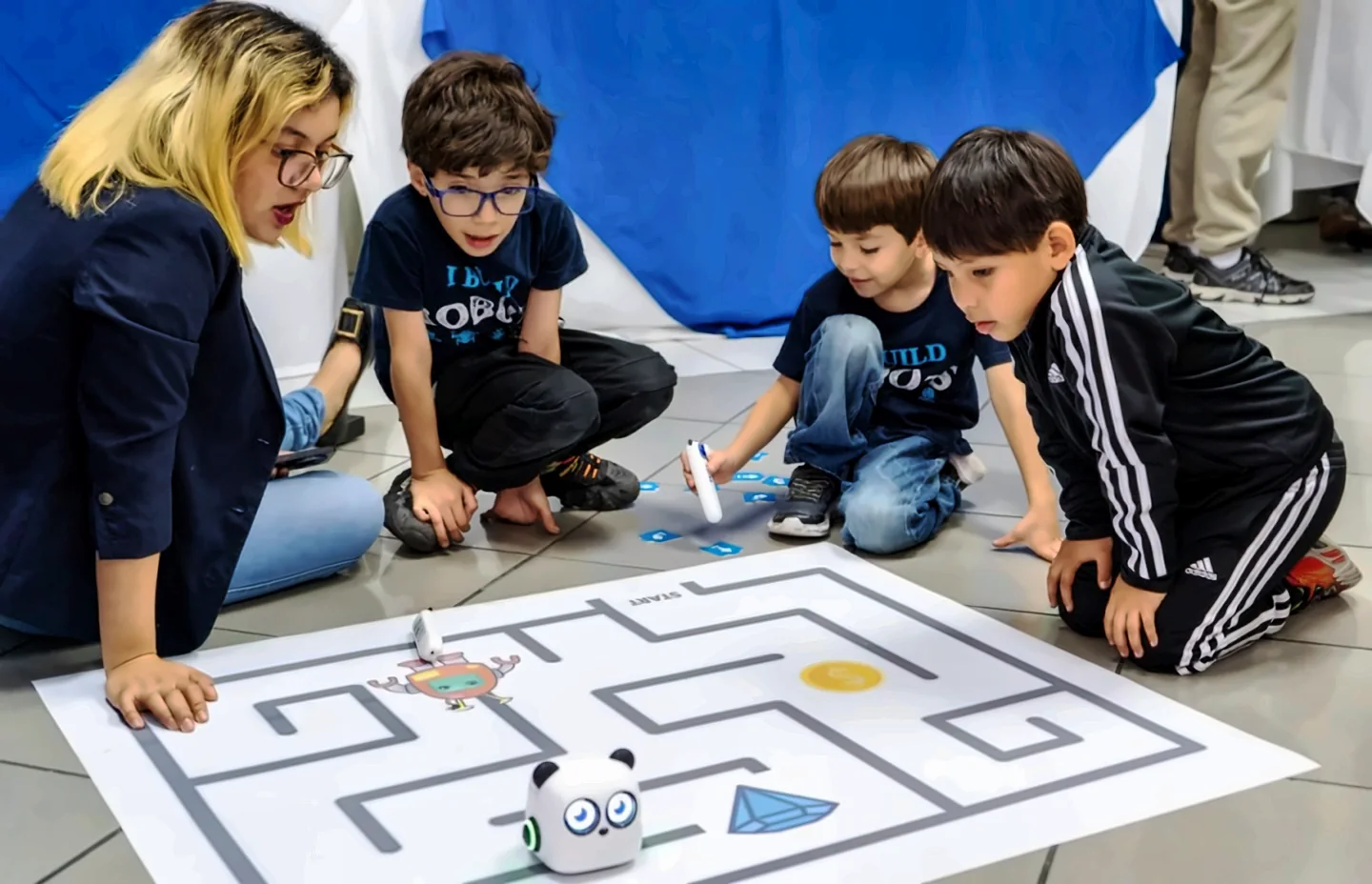
No lectures. Every session ends with something that moves, gets programmed or solves a problem. Students progress through levels, and each level ends with their own project that they design, build and present.
Real building
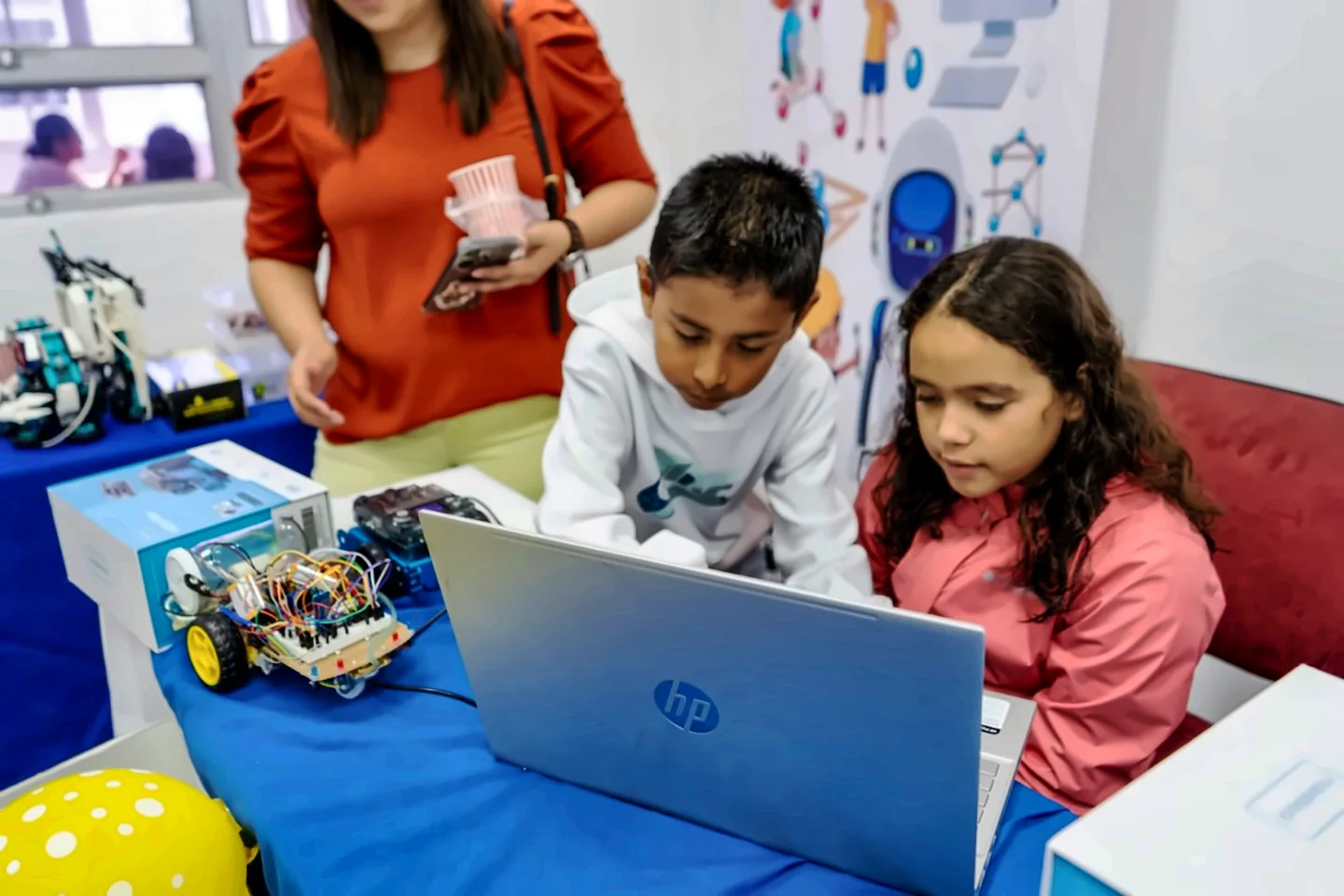
Mechanics, structures and motion transmission with LEGO Education, Makeblock and 3D-printed parts.
Progressive programming
From visual blocks in Scratch to code on Arduino, micro:bit and Raspberry Pi, depending on the level.
Their own projects
Each level ends with a project the student defends in front of classmates.
Competition path
Preparation and coaching toward national and international tournaments for those who want to get there.
A pathway built on a growth mindset
From early motor development to published research. Each level adds digital and human skills and ends with a project the student designs, builds and defends.
- 01
Early Robotics
Motor development, language and communication, social-emotional growth, logic and math.
- 02
Junior
Computational thinking, reasoning, problem solving, spatial awareness and geometry.
- 03
Basic
Natural phenomena and identifying and measuring physical variables.
- 04
Intermediate
Programming, kinematics, velocity and acceleration, Boolean logic.
- 05
Advanced 1 & 2
Robot design, advanced programming, AI, IoT and app development.
- 06
R&D+i
Research, development and innovation: competitions and publications.
What they work with
Education-grade platforms used by engineering schools worldwide, adapted to each level and age.
- LEGO Education
- Arduino
- micro:bit
- Raspberry Pi
- Makeblock
- Scratch
- 3D printing
- Sensors and actuators
What they really take away
- Logical thinking and the ability to break complex problems into solvable parts.
- Resilience. A robot that doesn't work teaches more than a passed exam.
- Teamwork with real technical roles and deadlines that get met.
- Technical communication: explaining and defending their design in front of others.
- Confidence. Knowing they can build something that once seemed impossible.
65% of children starting primary school today will work in jobs that don't exist yet. That's why we have to reinvent the way we teach.
Book a demo class
The best way to understand the club is for your child to take a class with us.
Free · No commitment